
Category: Invertebrates

This phylum of animals inhabits marine waters worldwide. They are named for their distinctive rows of cilia, or combs, that they use swimming – they are actually the largest organism in the world that uses cilia for locomotion. They possess a decentralized nerve net rather than a brain and display a wide range of body forms –for example, coastal species have sturdy bodies that are able to withstand constant buffeting by waves while some open-ocean species are so fragile it is difficult to collect them for study.
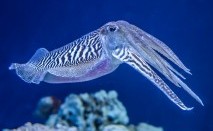
Cephalopods: Masterminds of the Ocean.
Octopi, cuttlefish, and squids - all cephalopods - have been observed engaging in amazing feats of intelligence (perhaps unsurprising, as cuttlefish and octopuses have the highest brain-to-body mass of all invertebrates). Their suction-cup covered arms are dexterous, and octopuses have been observed putting them to use throwing rocks, opening screw-top jars, even picking up and gathering coconut shells to build fortresses for themselves. Squids, for their part, have been observed hunting cooperatively and are able to communicate with one another via color changes, patterns, and flashing to one another - sometimes using different sides of their bodies to broadcast different signals to multiple squids! Just how smart are they? As they are typically elusive and so very different from humans, we aren’t sure yet - but we do know the question is not “Are they intelligent?” but “How intelligent are they?”
Learn more >>
 Discover Animals is a web-based educational resource offered by the NAIA
