
Category: Invertebrates
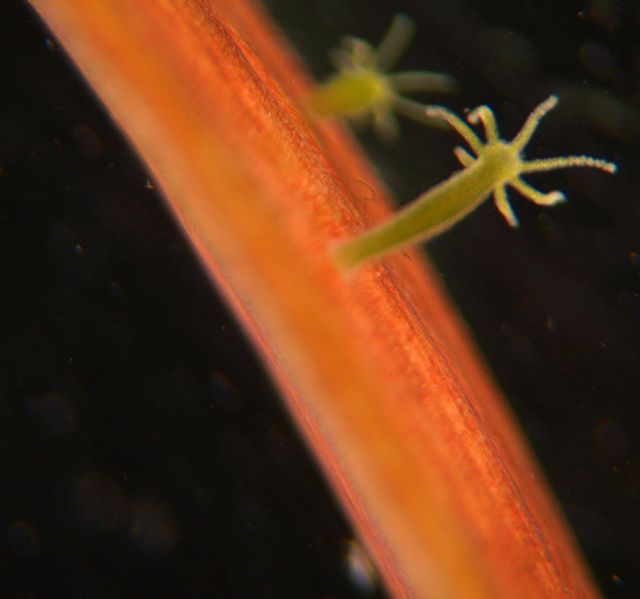
Hydras make up a genus of tiny (up to 10 mm long), tentacle, aquatic, predatory animals that are commonly found in unpolluted ponds, lakes, and streams in temperate and tropical regions. They are of special interest to science because they do not seem to age or die of old age. While generally stationary, or sessile, they are able to move themselves when necessary by bending over and grabbing onto the substrate with their mouth and tentacles while releasing with their “foot” – using this motion, they are able “loop” or “somersault” several inches in a day!
Body horror in the insect kingdom
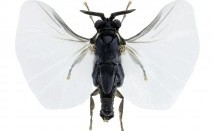
Learning about animals, you can discover many fascinating, even beautiful facts, but there are also things that can give you nightmares! Enter the strepsiptera (“twisted-wing parasite”). The adult female has no limbs, wings, or mouth - she simply lives in and feeds off her host (typically a wasp). When it becomes time to mate, she protrudes part of her abdomen from between the plates of her host and uses mind control to get the wasp to fly off to nearby males. Sexually mature males have wings, and fly around for about five hours before dying - spending their entire short existence seeking out females to mate with. After the female is impregnated, her own young grow and consume her. And once there is nothing left to eat, they leave their host wasp, infiltrate the nursery, and latch on to a larvae to create their own “zombie wasp” host and continue the grisly cycle!
Learn more >>
 Discover Animals is a web-based educational resource offered by the NAIA
