
Category: Invertebrates
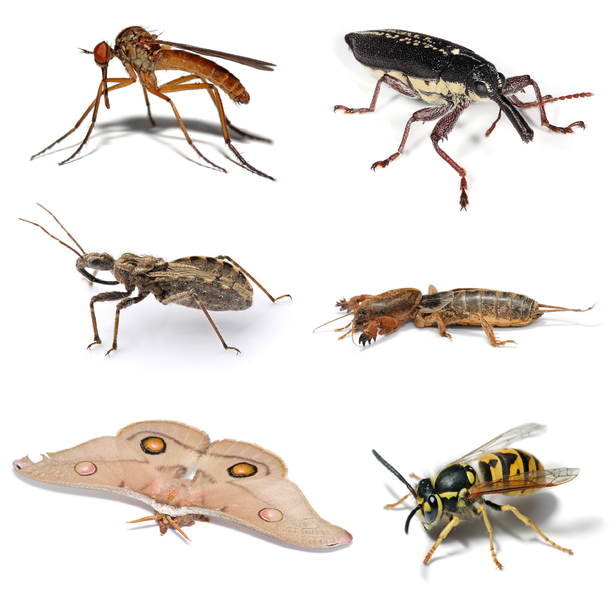
This class of invertebrates has a chitinous skeleton, a three part body (consisting of a head, thorax, and abdomen), six pairs of jointed legs, compound eyes, and a pair of antenna. They are an incredibly diverse group of animals with more than a million described species that represent more than half of all living organisms. Their growth is constrained by an inelastic exoskeleton that must be shed (molted) in order for them to increase in size. Insects display a staggeringly diverse array of adaptations, from walking on water (water striders), to communicating with light (lightning bugs), and sound (crickets), to complex social behaviors (termites).

It’s an ant’s world. We’re just living in it.
Do humans truly dominate the world? The Argentine ant may have something to say about that. Many ants are known for their large colonies, but the Argentine ant, named for its South American origins takes this to a whole other level. Due to inadvertent introduction by humans, the Argentine ant has spread to all continents except Antarctica. There are now three known super-colonies of these ants: one in Europe (the largest, covering 3,700 miles), one in California (560 miles), and another on the west coast of Japan. Ants are often territorial, but amazingly, ants belonging to the super-colonies recognize one another: if you were to introduce a super colony ant from Japan to one from Europe or California, they will recognize each other as friends!
Learn more >>
 Discover Animals is a web-based educational resource offered by the NAIA
