
Category: Mammals
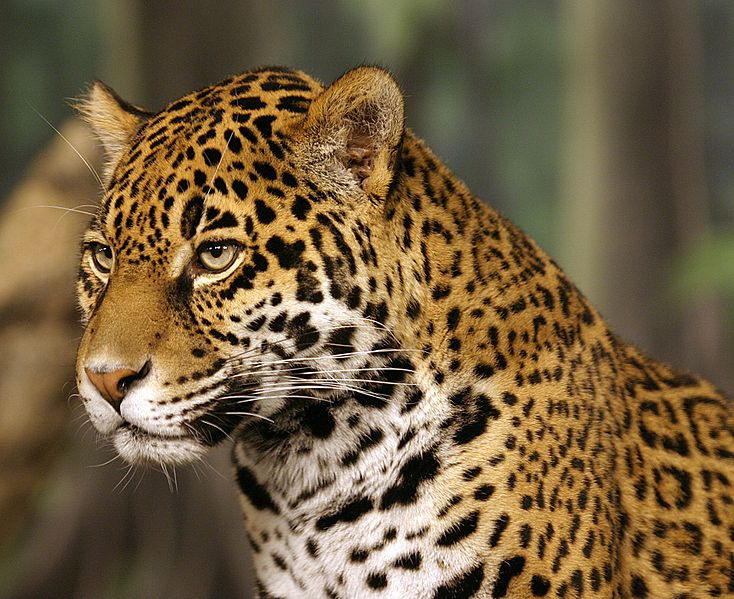
The jaguar is the largest wild feline in the Americas and ranges from the southwestern United States all the way down to northern Argentina. For habitat, it prefers dense rainforest but will tolerate a variety of forested and open environments. Their stocky, powerful limb structure allows them to be adept at swimming, climbing, and crawling. Its exceptionally powerful bite contributes to its versatility as a predator – it is able to puncture the armor of reptiles as well as kill prey by biting through the skull.
A 200 Million Year-old Iconoclast
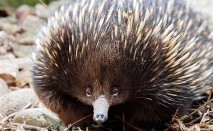
If a defining trait of mammals is that they give live birth to their young, how do you explain monotremes? Monotremes are mammals that lay eggs like a reptile, rather than giving birth to live young. Living examples of these unusual animals can only be found in Australia and New Guinea today, though they used to be more widespread. A monotreme egg has less yolk for supplying nutrients than a reptile egg, and when a young echidna or platypus hatches, it is very tiny and less developed than its reptile counterpart. But monotreme babies are able to grow and thrive because their mothers stay with them, lactating to supply vital nutrients for their growth - just like other mammals!
Learn more >>
 Discover Animals is a web-based educational resource offered by the NAIA
