
Category: Invertebrates
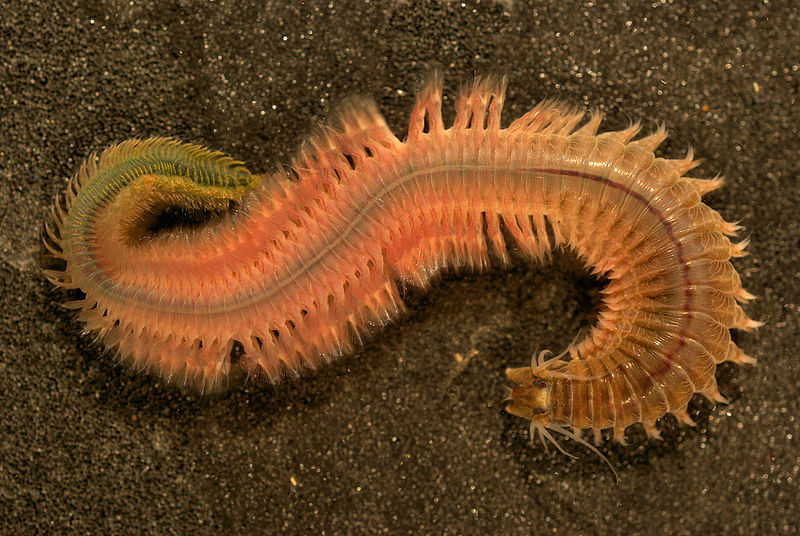
This family of polychaete worms contains about 500 mostly marine species. They can be found in all water depths – hiding under rocks, burrowing through mud, and foraging in seaweeds. They are generally omnivores but some species are actively carnivorous. When reproducing, ragworms morph into a new form known as an “epitoke” during which their digestive system may degenerate and all energy is diverted to reproduction – it dies after reproduction. This “epitoke” stage was once thought to be a different species.

It’s an ant’s world. We’re just living in it.
Do humans truly dominate the world? The Argentine ant may have something to say about that. Many ants are known for their large colonies, but the Argentine ant, named for its South American origins takes this to a whole other level. Due to inadvertent introduction by humans, the Argentine ant has spread to all continents except Antarctica. There are now three known super-colonies of these ants: one in Europe (the largest, covering 3,700 miles), one in California (560 miles), and another on the west coast of Japan. Ants are often territorial, but amazingly, ants belonging to the super-colonies recognize one another: if you were to introduce a super colony ant from Japan to one from Europe or California, they will recognize each other as friends!
Learn more >>
 Discover Animals is a web-based educational resource offered by the NAIA
