
Category: Invertebrates
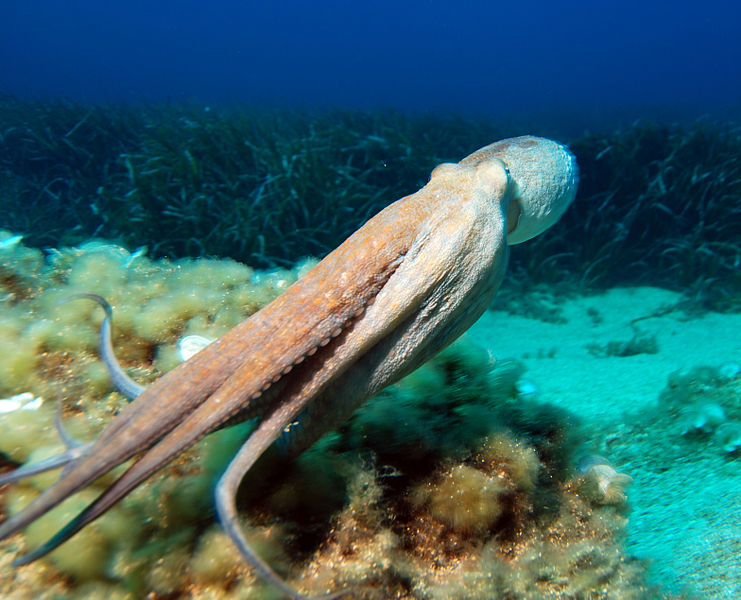
These ocean dwelling animals are characterized by bilateral body symmetry, a prominent head, and a set of arms, or tentacles. There are about 800 identified species of cephalopods, a class that includes squid, octopi, nautili, and cuttlefish. With their well-developed senses and large brains, cephalopods are widely considered the most intelligent of the invertebrates. With only a few exceptions, all cephalopods have an ink sac, which can be squirted into the surrounding water to confuse predators. They are also the only mollusks with a closed circulatory system.

It’s an ant’s world. We’re just living in it.
Do humans truly dominate the world? The Argentine ant may have something to say about that. Many ants are known for their large colonies, but the Argentine ant, named for its South American origins takes this to a whole other level. Due to inadvertent introduction by humans, the Argentine ant has spread to all continents except Antarctica. There are now three known super-colonies of these ants: one in Europe (the largest, covering 3,700 miles), one in California (560 miles), and another on the west coast of Japan. Ants are often territorial, but amazingly, ants belonging to the super-colonies recognize one another: if you were to introduce a super colony ant from Japan to one from Europe or California, they will recognize each other as friends!
Learn more >>
 Discover Animals is a web-based educational resource offered by the NAIA
