
Category: Mammals

These solitary, nocturnal marsupials are found in North America north of Mexico. They are omnivores and often a familiar site in suburban and even urban areas where they rummage in the garbage for food, steal pet food left outdoors, and otherwise glean nutrition and shelter from human habits and habitations. They are famous for their curious adaptation of “playing opossum,” the act playing dead, sick, or injured in attempt to discourage attackers or other perceived threats. It should be noted that this is a result of extreme fear on the opossum’s part and they actually enter a brief, coma-like state where they are unable to move or react to stimulus – they are fully conscious however.
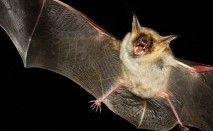
The age-defying Brandt’s bat
In most mammals, larger size correlates with longer lifespan, but that is not the case with the Brandt’s bat, who can live up to 41 years and weigh less than 0.28 ounces! These bats resemble larger, longer-lived mammals in that they mature slowly and have fewer offspring – but the size difference is dramatic: a female Bonobo lives for approximately 40 years as well, but she outweighs the Brandt’s bat by a factor of 3,771! Oddly enough, it is suspected that the mutated gene that causes the bat’s dwarfish size is the same one that leads to its long lifespan. Studying animals with unusual longevity like the Brandt’s bat does more than just satisfy our curiosity, it could lead to longer, healthier lifespans for humans and other animals!
Learn more >>
 Discover Animals is a web-based educational resource offered by the NAIA
